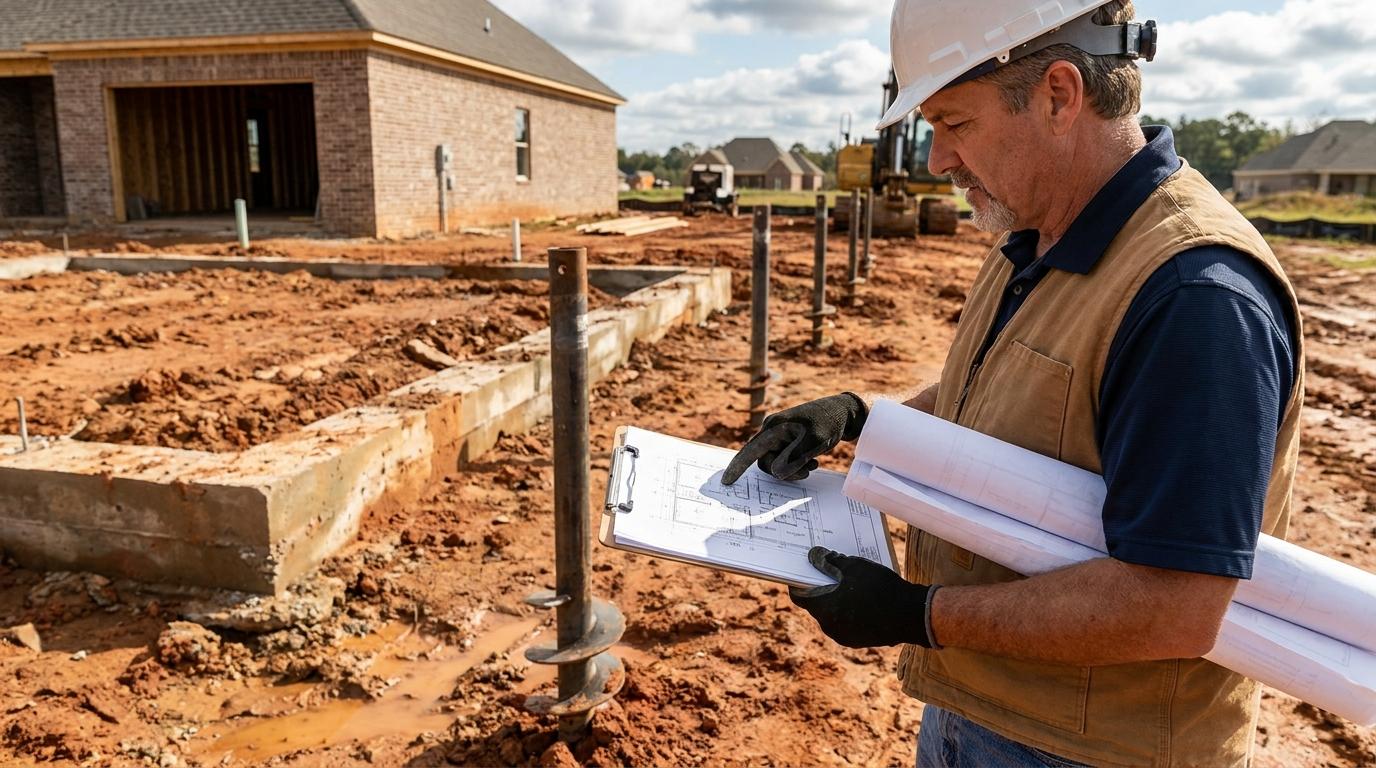
Before buying a house in Mississippi, look for cracks, sticking doors or windows, uneven floors, moisture, standing water, and drainage that directs runoff toward the home. A seller disclosure can point to known history, but it isn’t a substitute for an independent home and foundation inspection during your due diligence. If a walkthrough shows signs that are worth a closer look, Superior Foundation Services offers foundation inspections and structural assessments along with foundation repair options so you can get clear answers before closing.
Exterior and Interior Signs Worth a Closer Look
Start with a slow walk around the outside of the house, then move room to room inside. None of the items below confirms a structural problem on its own so compare several signs together, along with drainage patterns and any repair paperwork, before drawing conclusions.
- Stair-step cracks in brick or block
- Diagonal cracks around doors or windows
- Doors or windows that stick or no longer close evenly
- Uneven or sloping floors
- Drywall separation at corners, ceilings, or trim joints
- Visible cracking in the foundation itself
- Gaps forming at exterior openings, such as siding or trim
Crawl Space Clues Buyers Often Miss
Crawl space problems are easy to overlook if you only walk through the finished living space. Look for these conditions, or ask your inspector to check them directly:
- Damp soil or pooling water on the crawl space floor
- A musty or stale odor
- Damaged or deteriorated wood framing
- Leaning or unstable support posts
- Moisture control material, such as a vapor barrier, that looks incomplete or damaged
Mississippi’s expansive clay soils shift as moisture levels change, so soil and water conditions around the entire home matter as much as any single crack you find inside it.
Drainage and Standing Water Around the Property
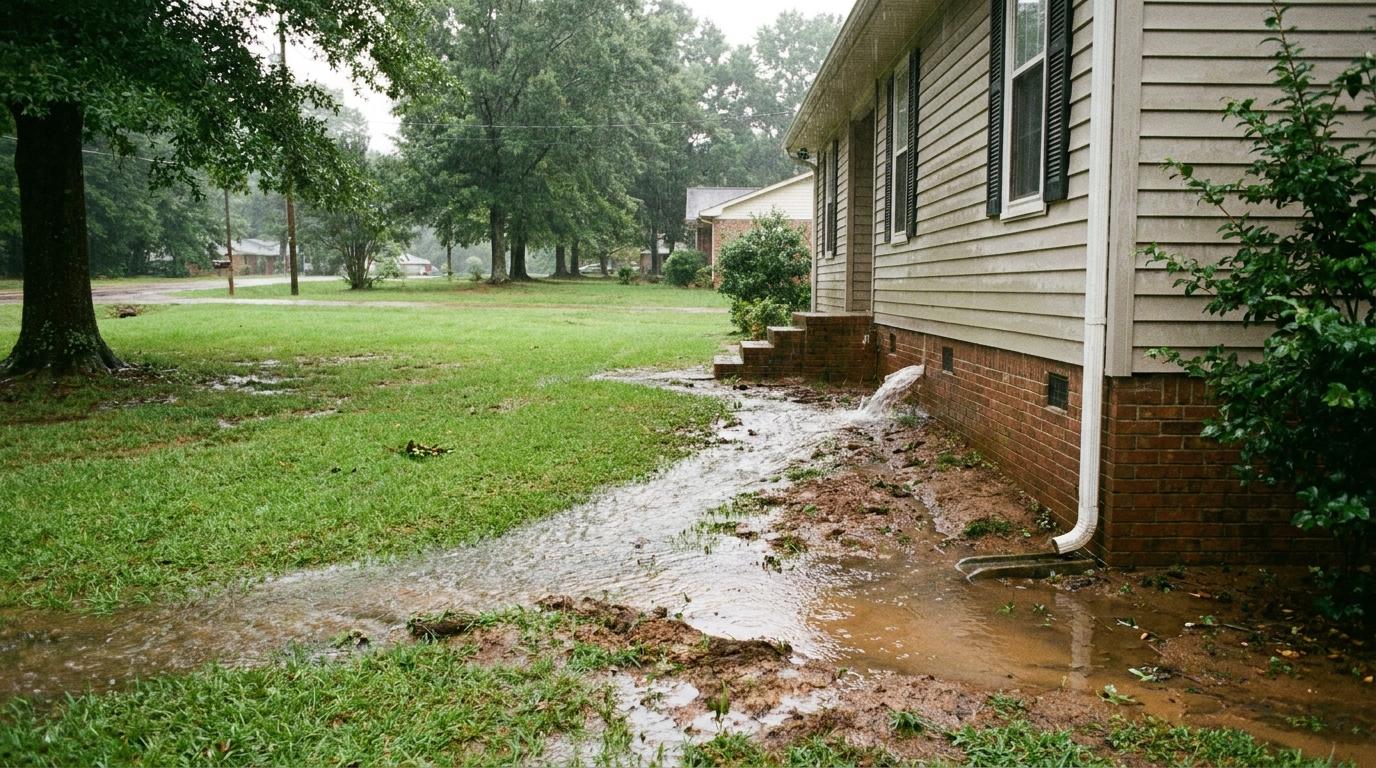
Standing water, poor grading, and downspouts that discharge close to the foundation can keep soil wet near the home, contributing to moisture-related concerns over time. After you finish checking the house itself, walk the yard and note how water moves during or after rain. For a closer look at yard-level fixes, see drainage conditions that can affect a foundation.
What Seller Disclosures, Repair Records, and Appraisals Can (and Cannot) Tell You
When a Mississippi home is sold with the help of a licensed broker or salesperson, state law requires the seller to give the buyer a Property Condition Disclosure Statement. If it arrives after the buyer has made an offer, the buyer can withdraw within three days of hand delivery or five days of mailing, without penalty. That disclosure reflects the seller’s actual knowledge, so it isn’t a warranty and it doesn’t replace an independent inspection.
A lender’s appraisal isn’t a home inspection, either. An appraisal simply estimates what the home is worth to the bank. It doesn’t evaluate the structure’s overall health. Just because an appraisal gets approved doesn’t mean the foundation is in good shape.
If the disclosure or the seller mentions prior foundation work, ask for documentation before you rely on it:
- Written engineering or foundation repair reports
- Dates and scope of the completed work
- Whether any repair warranty transfers to a new owner
Then have your own qualified inspector assess the current condition. A past repair isn’t automatic proof of an ongoing problem, and it isn’t a reason to skip independent evaluation either. As one example of what transferable warranty terms can look like, Superior Foundation Services backs foundation repairs using conventional, slab, and concrete piers with a lifetime, address-based warranty that transfers when the home sells, while helical piers used for new construction carry a 10-year warranty. If a seller presents similar paperwork, review the terms and confirm they still apply to the property.
Frequently Asked Questions
Should I walk away from a house with foundation cracks?
Not automatically. Compare the crack pattern with other signs, such as sticking doors, uneven floors, or yard drainage issues. Review any seller disclosure or repair paperwork. A qualified inspector is best positioned to tell you whether the property needs further evaluation before you decide.
What foundation repair documents should I request from the seller?
Ask for written engineering or repair reports, the dates and scope of any prior work, and whether a repair warranty transfers to you as the new owner. Paperwork alone doesn’t confirm present-day condition, so have your own inspector verify it.
Can a standard home inspection identify every foundation issue?
A general home inspection covers many aspects of a home’s condition, but it isn’t the same as a lender appraisal, which focuses on value and minimum property standards. If your inspector flags a foundation concern, a follow-up assessment from a specialist familiar with local soil conditions can help confirm what’s going on.
Get a Second Opinion Before Your Inspection Window Closes
If your walkthrough turns up cracks, sticking doors, crawl space moisture, or yard drainage issues, it’s worth getting a professional opinion while you still have time during your due diligence.
Superior Foundation Services provides foundation inspections and structural assessments across Central Mississippi, including Jackson, Madison, Ridgeland, Brandon, Clinton, Pearl, Flowood, and Canton. Call (601) 874-0297 to schedule a visit before your contingency deadline arrives.