Knowing how to clean an epoxy garage floor correctly separates a coating that holds its finish from one that hazes far sooner than it should. Epoxy garage floor coatings are low-maintenance, not zero-maintenance. After installing epoxy floors across Jackson, Ridgeland, and Central Mississippi, Superior Foundation Services knows that the cleaning method one uses is the single biggest variable in a floor’s long-term finish.
Most Mississippi homeowners assume a dull, hazy epoxy floor means the coating is failing, that it needs to be stripped and replaced. Our experience has taught us that the real cause is almost always the cleaning product, not the floor itself. High-pH soaps and common degreasers leave a film that builds on the topcoat and scatters light unevenly. Superior Foundation Services has seen this pattern regularly across the Jackson area. The fix is simple once you know what to change.
How To Clean an Epoxy Garage Floor: Step by Step

For routine maintenance, focus on the 4 steps below. For heavily soiled floors, you can follow the same process, but plan to spend more time on step three.
- Step 1: Dry-sweep before water touches the floor. Grit tracked underfoot acts like sandpaper on the topcoat. A push broom or dust mop removes it. Skip the leaf blower—it moves dust around rather than clearing it.
- Step 2: Mix a pH-neutral cleaner with warm water. A few drops of dish soap per gallon is enough. Avoid degreasers unless they’re formulated for epoxy. Many are alkaline enough to etch the topcoat with repeated use.
- Step 3: Mop with a microfiber mop wrung until damp, not soaking. Excess water in a poorly ventilated Mississippi garage can take much longer to dry than you’d expect. Work in overlapping sections to avoid streaks near walls.
- Step 4: Rinse with clean water and squeegee dry. This is the step most homeowners skip, and it’s where residue starts to accumulate. A floor squeegee pulled toward the door takes two minutes and preserves the finish across years of use.
Products That Protect the Coating (and What to Avoid)

Safe options for cleaning epoxy garage floors include pH-neutral dish soap, Simple Green diluted per label instructions, and products like ZEP Neutral pH Floor Cleaner. Avoid:
- Bleach-based cleaners (degrades the topcoat bond over time)
- Citrus degreasers (acidic enough to etch the surface with repeated use)
- Soap with wax or moisturizer added (leaves film that accumulates on the finish)
- Steel wool or abrasive scrub pads (permanently scratches the topcoat)
- Vinegar solutions (commonly recommended online, but damaging to epoxy)
For oil or tire marks, apply undiluted dish soap directly, wait two minutes, and scrub with a soft nylon brush. Prompt treatment prevents bonding. Our epoxy floor maintenance tips address additional types of stains.
How Mississippi’s Climate Affects Your Cleaning Schedule
Garage floors near red clay driveways (common in the Jackson and Flowood areas) pick up abrasive grit faster during wet months than floors adjacent to paved approaches. Mississippi clay bonds to epoxy if it dries in place, and rinsing promptly after muddy foot traffic prevents it from grinding into the topcoat.
Monthly cleaning during spring and fall, when soil and pollen peak, and a six-to-eight-week interval the rest of the year are sufficient for most homes. For epoxy garage floors in Jackson, MS, consistent maintenance is the simplest way to protect flooring investments long term.
Frequently Asked Questions
Can I use a pressure washer to clean my epoxy garage floor?
Yes, but be careful. A pressure washer on a low-pressure setting, held well back from the surface, is generally safe for epoxy. Higher pressure can force water into seams at the wall joint or beneath coating edges that are beginning to lift. For routine cleaning, a mop and rinse delivers the same result with less risk.
How often should I clean an epoxy garage floor?
Most epoxy floors benefit from a full mop cleaning once a month during heavy-use seasons and every six to eight weeks otherwise. Spot clean oil drips immediately. Dried motor oil requires more aggressive scrubbing that risks damaging the finish. Superior Foundation Services recommends a quarterly walk-through to catch edge lifting or surface staining before it spreads.
What causes an epoxy floor to look dull or cloudy after cleaning?
Soap residue is the most common culprit behind a dull or cloudy epoxy finish. High-pH cleaners leave a film that accumulates with each wash and scatters light unevenly. Rinsing thoroughly with clean water after every cleaning session and switching to a pH-neutral product resolves the issue in most cases without requiring professional help.
Keep Your Epoxy Floor Looking Sharp
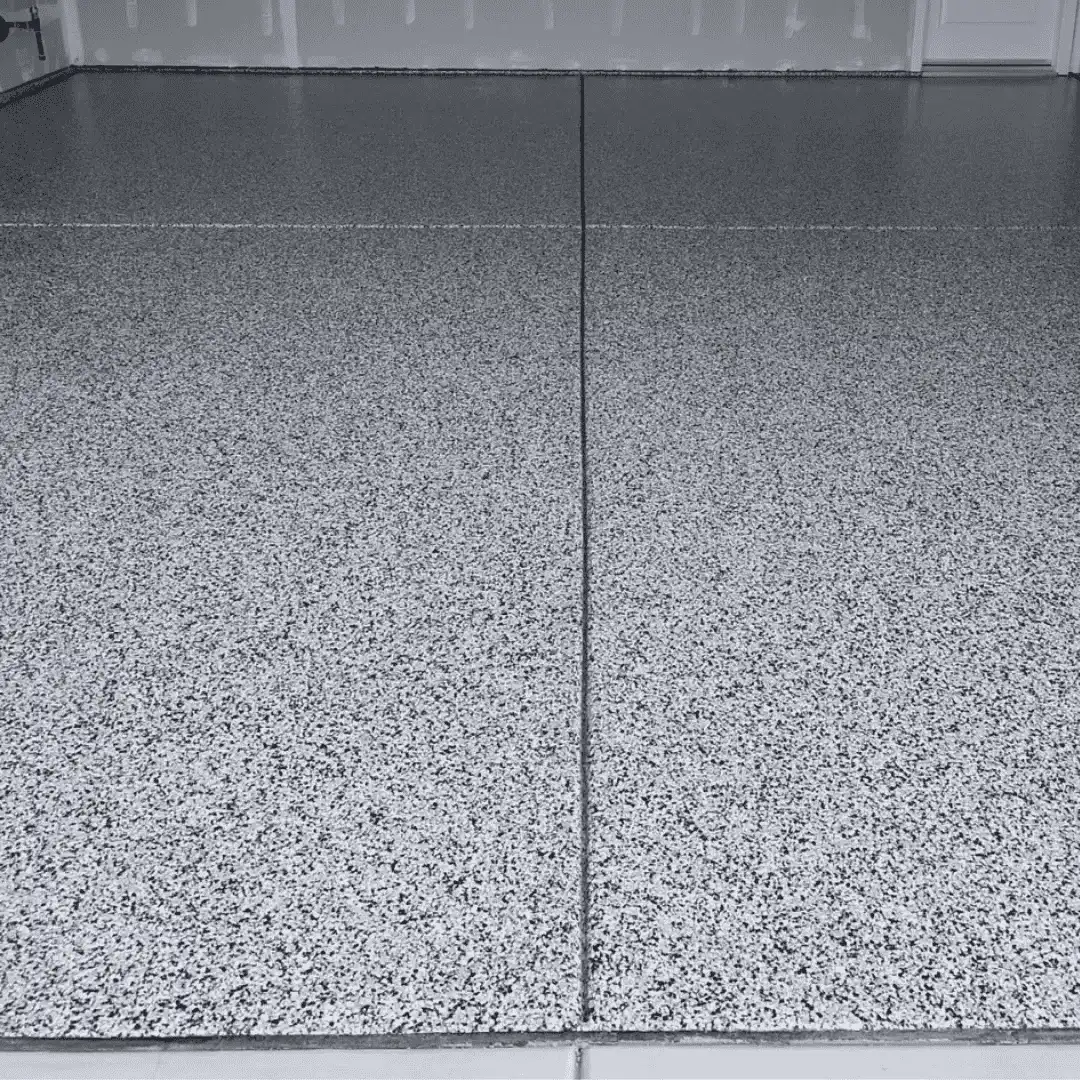
Dry sweep, pH-neutral cleaner, damp mop, full rinse—that routine is what keeps the finish intact year after year. In Mississippi’s humidity, skipping the rinse is where most damage quietly starts. If your floor has developed a hazy appearance, the edge has started to lift, or it has a stain that refuses to budge with simple cleaning, a professional assessment could help before it becomes a resurfacing project. Contact Superior Foundation Services to get started.