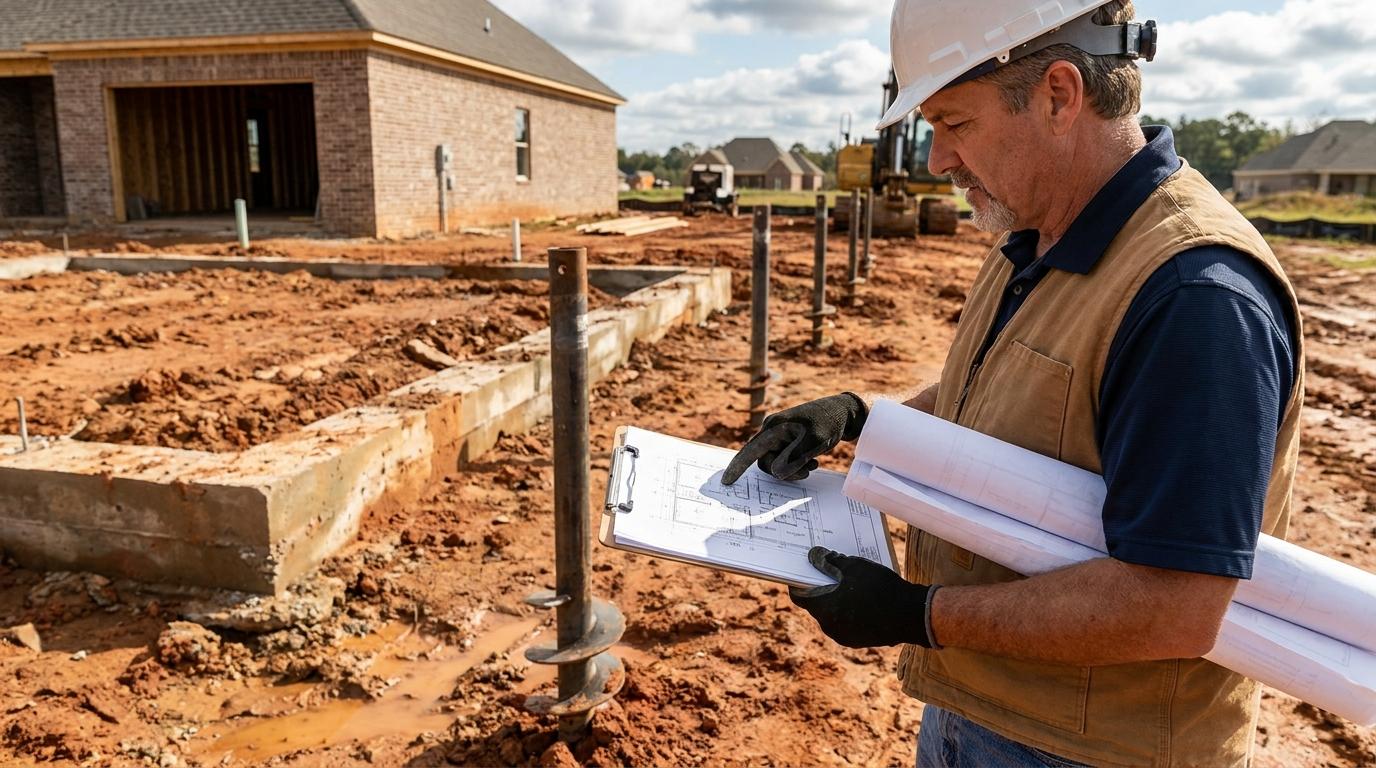
Standing water in your yard isn’t just a landscaping problem; it’s a drainage failure that threatens the foundation underneath. When water pools near the house instead of draining away, it saturates Mississippi’s Yazoo clay, which swells against the foundation and then shrinks as it dries, working the structure loose season after season. It traces back to one of three causes: ground that slopes toward the house, compacted clay that won’t absorb water, or a missing or failed drainage system. Each one needs a different fix, which is why the right solution starts with the right diagnosis.
That’s also why the common DIY move, a few bags of fill dirt, doesn’t work. It hides the puddle without touching the grade, the compacted soil, or the missing drainage path that caused it. Superior Foundation Services builds drainage systems that redirect yard water away from foundations across the Jackson metro and statewide. Discover why standing water damages a foundation, the three causes behind it, and the drainage solutions that stop the damage.
Why Standing Water Is a Foundation Problem
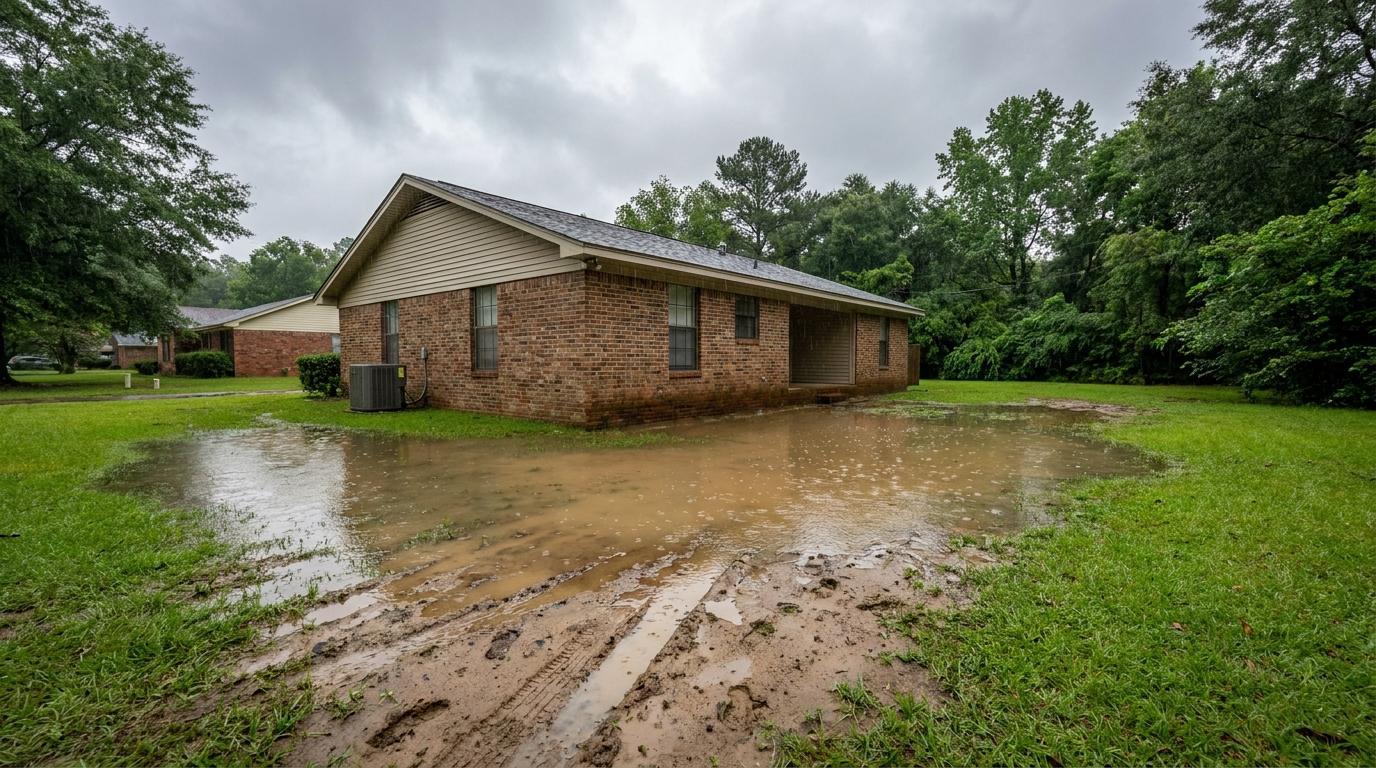
Standing water doesn’t just kill grass. It feeds directly into the soil conditions that cause foundation failure in Mississippi.
Mississippi’s Yazoo clay absorbs water and expands with enough force to push a foundation upward. When the water recedes and the clay dries, it contracts and pulls away from the foundation, leaving voids beneath the slab. This shrink-swell cycle repeats with every rain event, and standing water makes every cycle more severe because the soil stays saturated longer than it would with proper drainage.
The longer water sits against the foundation, the deeper it penetrates. Over months, this moisture migration weakens the soil’s bearing capacity and increases the lateral pressure on foundation walls. Cracks, bowing walls, and uneven floors often trace back to a standing water problem that went unaddressed for a single wet season.
Three Common Causes of Standing Water in Mississippi Yards
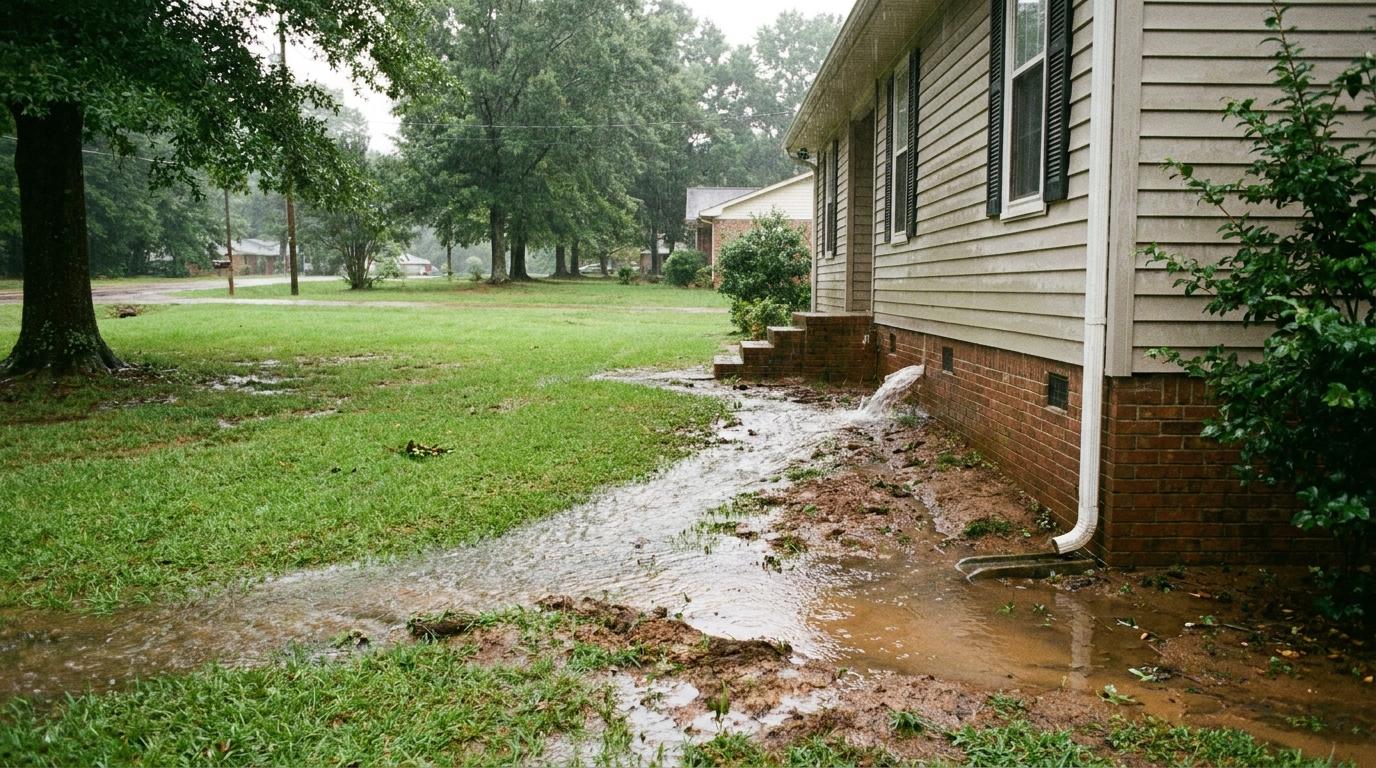
Standing water rarely has a single cause. Most Mississippi yards that hold water have at least one of these three conditions working against them.
Negative Grading
The ground around the home slopes toward the foundation instead of away from it. This directs roof runoff, rainwater, and irrigation flow straight into the soil against the foundation walls. Negative grading is common in older Mississippi homes where soil has settled or been disturbed by landscaping projects.
Compacted Clay Soil
Mississippi’s clay-heavy soil compacts easily under foot traffic, construction equipment, and natural settling. Compacted clay absorbs water slowly and doesn’t drain well, which forces water to sit on the surface. Adding topsoil over compacted clay doesn’t solve the problem because the drainage barrier is below the surface.
Missing or Failed Drainage Systems
Some properties never had a drainage system installed. Others have French drains or downspout extensions that have clogged, collapsed, or been damaged over time. Understanding how French drains redirect subsurface water helps clarify why a failed or missing system causes pooling that surface fixes can’t solve.
Drainage Solutions That Stop the Damage
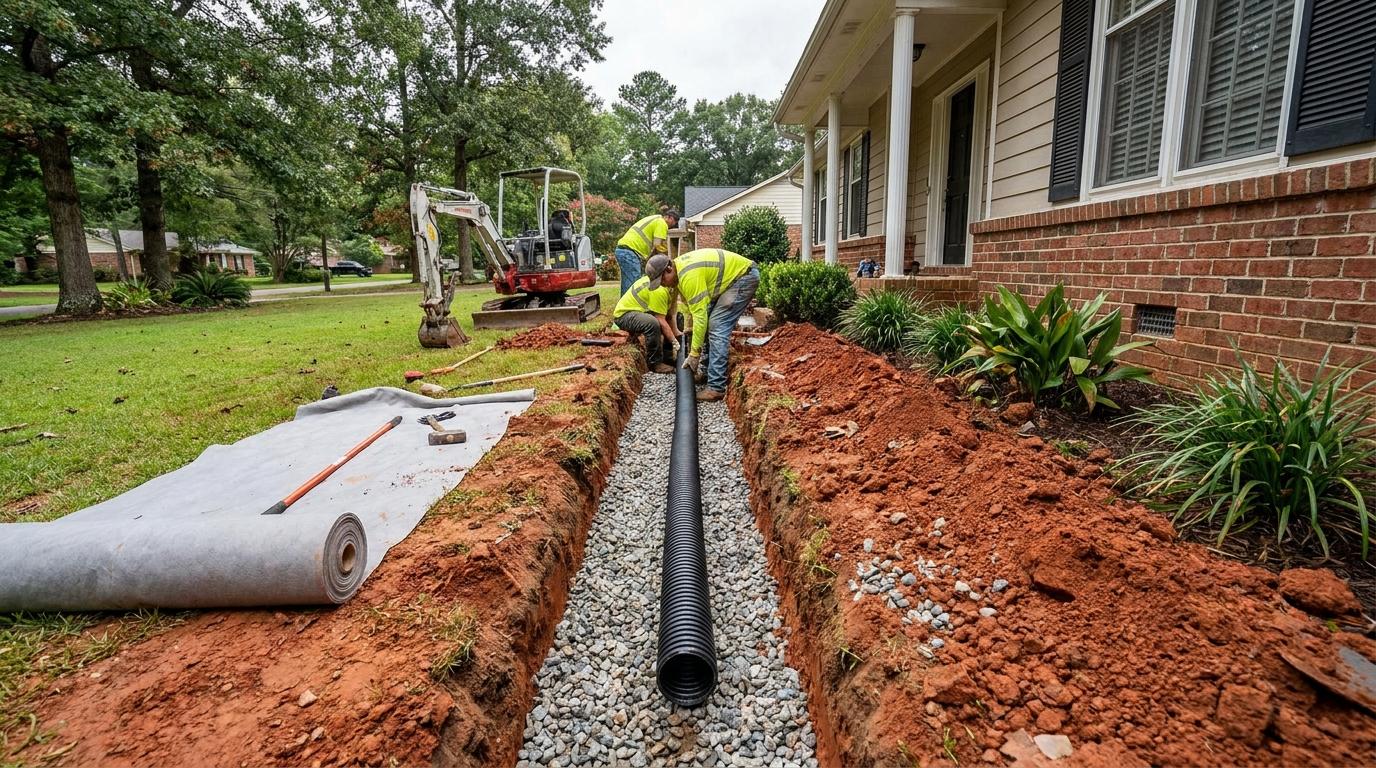
The right fix depends on what’s causing the standing water. Most properties need a combination of these approaches.
French drains installed along the foundation perimeter collect subsurface water before it reaches the slab. Surface drainage channels handle runoff from hardscaped areas like driveways and patios. Regrading the yard corrects the slope so water flows away from the house. Downspout extensions route roof runoff at least 10 feet from the foundation. Superior Foundation Services installs all four systems, including French drains sized for Mississippi clay, and most residential projects combine two or more based on a site inspection.
When standing water has already caused foundation movement, drainage alone isn’t enough. Pier stabilization for Mississippi foundations locks the structure in place while drainage prevents the soil conditions from recurring. Addressing both the symptom and the cause is the most effective approach for a lasting result.
Frequently Asked Questions
How quickly can standing water damage a foundation?
Standing water can begin damaging a foundation within a single wet season in Mississippi. The clay soil absorbs water and expands, creating uplift pressure against the slab within weeks of sustained saturation. This happens fast in clay-heavy areas like Brandon and Clinton, where Yazoo soil holds water against the foundation long after the rain stops. Cracks and settling often appear within three to six months of repeated pooling, and the damage accelerates each season because prior movement weakens the foundation’s ability to resist future soil pressure.
Will a French drain fix standing water in my yard?
A French drain fixes standing water caused by subsurface drainage failure, which is the most common cause in Mississippi yards. The drain collects groundwater through a perforated pipe in a gravel-filled trench and redirects it to a discharge point away from the home. If the standing water is caused by negative grading rather than subsurface water, regrading the yard is the primary fix, and a French drain provides secondary protection.
Should I fix the drainage or the foundation first?
Drainage should be fixed first or at the same time as foundation repairs. Repairing a foundation without addressing the drainage problem that caused the damage allows the same soil conditions to return and compromise the repair. Superior Foundation Services handles both drainage installation and foundation stabilization, which ensures the two systems are designed to work together from the start.
Fix the Drainage, Save the Foundation

Standing water in your yard is an active threat to your foundation that gets worse with every rain. The first step is finding the cause: negative grading, compacted soil, or a missing drainage system. From there, the fix follows—regrading, a French drain, surface channels, or downspout extensions, often in combination. And if the water has already moved the foundation, drainage on its own won’t undo that; pier stabilization locks the structure back in place while the new drainage keeps the soil from saturating again.
The longer the water sits, the more it costs to correct. Mississippi clay can crack a foundation in a single wet season. Contact Superior Foundation Services at (601) 941-2125 or schedule a free drainage and foundation inspection to find out what’s causing the water and how to stop it.