A crawl space dehumidifier is worth it in Mississippi when humidity stays above 60% even after a vapor barrier is in place, but on its own, in an open vented crawl space, it can’t keep up. The deciding factors are simple: take one humidity reading, and answer one structural question. If a hygrometer reads above 60% over 48 hours in summer, you have a moisture problem. And if the crawl space isn’t sealed, a dehumidifier can’t lower the humidity enough to prevent damage. Mississippi’s summer air brings in more moisture than the unit can remove.
That’s why sequence matters more than the machine. Crawl spaces near Jackson regularly hit 80% humidity by midsummer, and mold can form within 48 hours at that level. Superior Foundation Services seals the crawl space first, then sizes a dehumidifier to handle what’s left, across Central Mississippi. In this blog post, we share the humidity level that triggers damage, why a dehumidifier needs encapsulation to work, and what the right setup costs.
The Humidity Level That Triggers Damage
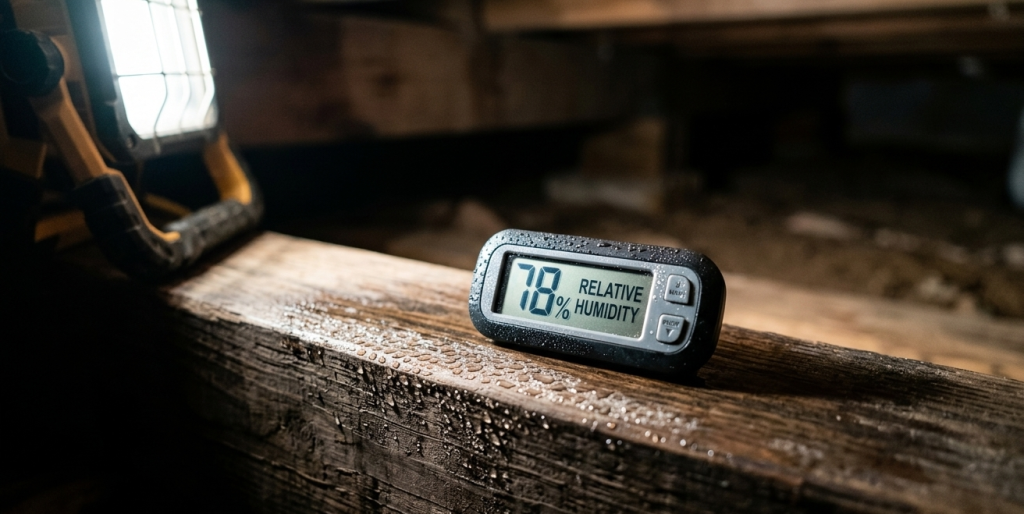
The 60% relative humidity mark separates a healthy crawl space from a failing one. Below it, wood framing stays dry and mold spores remain dormant. Above it, moisture condenses on floor joists, subfloor sheathing, and HVAC ductwork.
How Mississippi’s Climate Compounds the Risk
Mississippi averages roughly 73% outdoor relative humidity year-round, with summer months regularly exceeding 85%. Open crawl space vents pull that air directly under the house, and soil moisture adds to the load from below. This is a pattern we see constantly in older Vicksburg homes, where humid river-valley air and shaded lots keep crawl spaces damp well into fall. A hygrometer placed in your crawl space for 48 hours during summer gives an accurate baseline reading.
What Happens When Humidity Stays High
Sustained humidity above 60% causes problems that compound over time. Wood rot weakens joists and subflooring. Mold forms on organic surfaces and sends spores into living areas through the stack effect, allowing damp, stale air from the crawl space into your home. Condensation on ductwork reduces your HVAC’s efficiency and corrodes metal components.
Why a Dehumidifier Without Encapsulation Fails
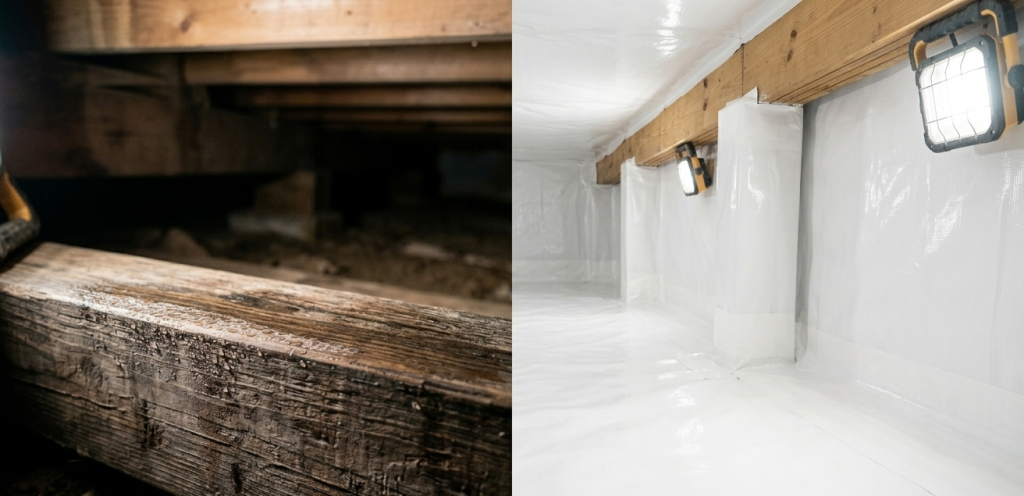
A standalone dehumidifier in an open crawl space fights a losing battle. Mississippi’s summer air carries enough moisture to saturate a 1,500-square-foot crawl space faster than most residential units can extract it.
How Encapsulation Changes the Equation
Encapsulation seals the crawl space with a heavy-duty vapor barrier across the floor and walls, blocking ground moisture and outdoor air. Once sealed, a properly sized dehumidifier can maintain 45% to 55% humidity with minimal runtime. Superior Foundation Services handles both the encapsulation and dehumidifier installation so the systems work together.
Sagging joists, standing water, or damaged supports need correction before encapsulation goes in. A free inspection identifies the crawl space repair needed so the vapor barrier sits on a stable, sound surface.
How to Size and Budget for the Right Unit

Dehumidifier capacity is measured in pints removed per day. A crawl space under 1,500 square feet in Mississippi typically needs a 70-pint commercial unit. Larger spaces may require 90 to 100 pints of daily capacity.
What the Installation Costs
A crawl space dehumidifier installed in Mississippi typically runs $1,000 to $2,500. When bundled with full encapsulation, the combined project usually falls between $5,000 and $15,000 depending on crawl space size, existing damage, and drainage needs.
What Pushes the Price Higher
Three factors increase cost: electrical work for a dedicated circuit, drainage routing for exterior discharge, and crawl space accessibility. Units with built-in humidity sensors and auto-drainage reduce long-term maintenance.
Frequently Asked Questions
How often should you replace a crawl space dehumidifier in Mississippi?
A commercial-grade crawl space dehumidifier typically lasts 8 to 12 years. Lifespan depends on total runtime hours and whether the unit operates inside an encapsulated environment. Units in unsealed crawl spaces wear out faster because they cycle continuously against incoming moisture.
Can you install a crawl space dehumidifier without encapsulation?
You can install one without encapsulation, but it will not control humidity effectively in Mississippi’s climate. Open vents and bare soil introduce moisture faster than most residential units can remove it. Encapsulation blocks the source so the dehumidifier only manages residual humidity.
What size dehumidifier does a Mississippi crawl space need?
Most Mississippi crawl spaces between 1,000 and 1,500 square feet need a 70-pint commercial dehumidifier. Spaces above 2,000 square feet typically require a 90- to 100-pint unit. Superior Foundation Services sizes each unit during a free inspection.
Control the Humidity Before It Controls Your Crawl Space
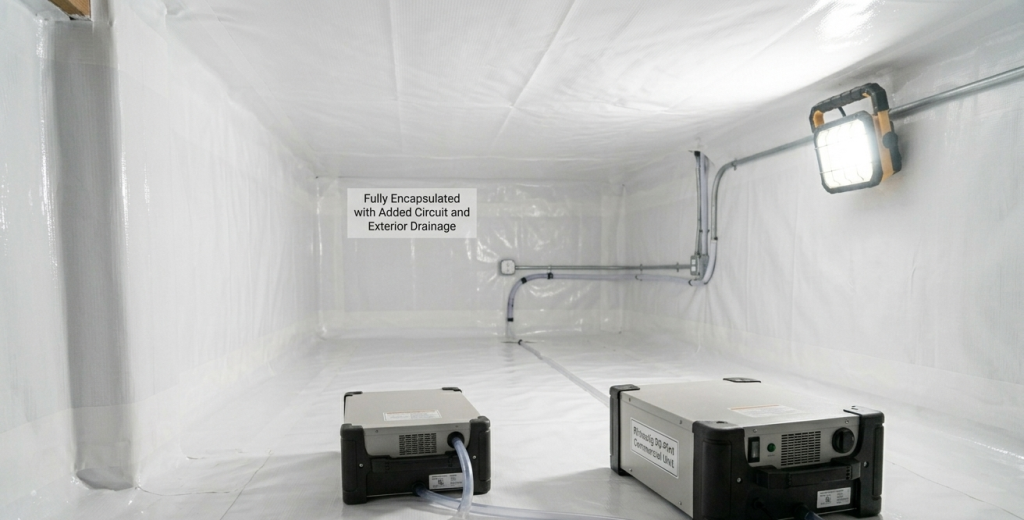
A dehumidifier does real work in a crawl space, but only after the space is sealed. Encapsulation comes first, because it stops moisture at the source, including ground vapor and humid outside air. Once the crawl space is sealed, a properly sized unit holds humidity at 45% to 55% with hardly any runtime. Put that same dehumidifier in an open, vented crawl space, and you’re paying to run a machine that can’t keep the moisture out.
Not sure which your crawl space needs—sealing, a dehumidifier, or both? Contact Superior Foundation Services at (601) 941-2125 or schedule a free crawl space inspection to get a straight answer based on your actual humidity readings and the condition of your crawl space.