In Mississippi’s humidity, crawl space ventilation works against you. The vented design assumes outside air flows in and carries moisture out. While that’s true in a dry climate, it does the opposite in our region, funneling warm, saturated summer air under the house where it condenses and promotes mold growth. A sealed crawl space blocks that air entirely with encapsulation and holds humidity at 45% to 55%. Below 60%, mold and wood rot can’t take hold; vented spaces routinely climb past 80% during Mississippi summers.
That gap is why the data on humidity, mold, and energy all points one way. Builder-installed vents feel like they should be doing their job, but when summer humidity tops 75%, they’re pulling the problem in rather than keeping it out. Superior Foundation Services converts vented areas to encapsulated crawl spaces across Central Mississippi. Below, we explain exactly how vented designs fail here, why sealed systems are better, and how much the conversion costs.
How Vented Crawl Spaces Fail in Mississippi’s Climate

Vented crawl spaces rely on a simple principle: outside air flows in, carries moisture out, and keeps the space dry. In arid climates with low ambient humidity, that logic holds.
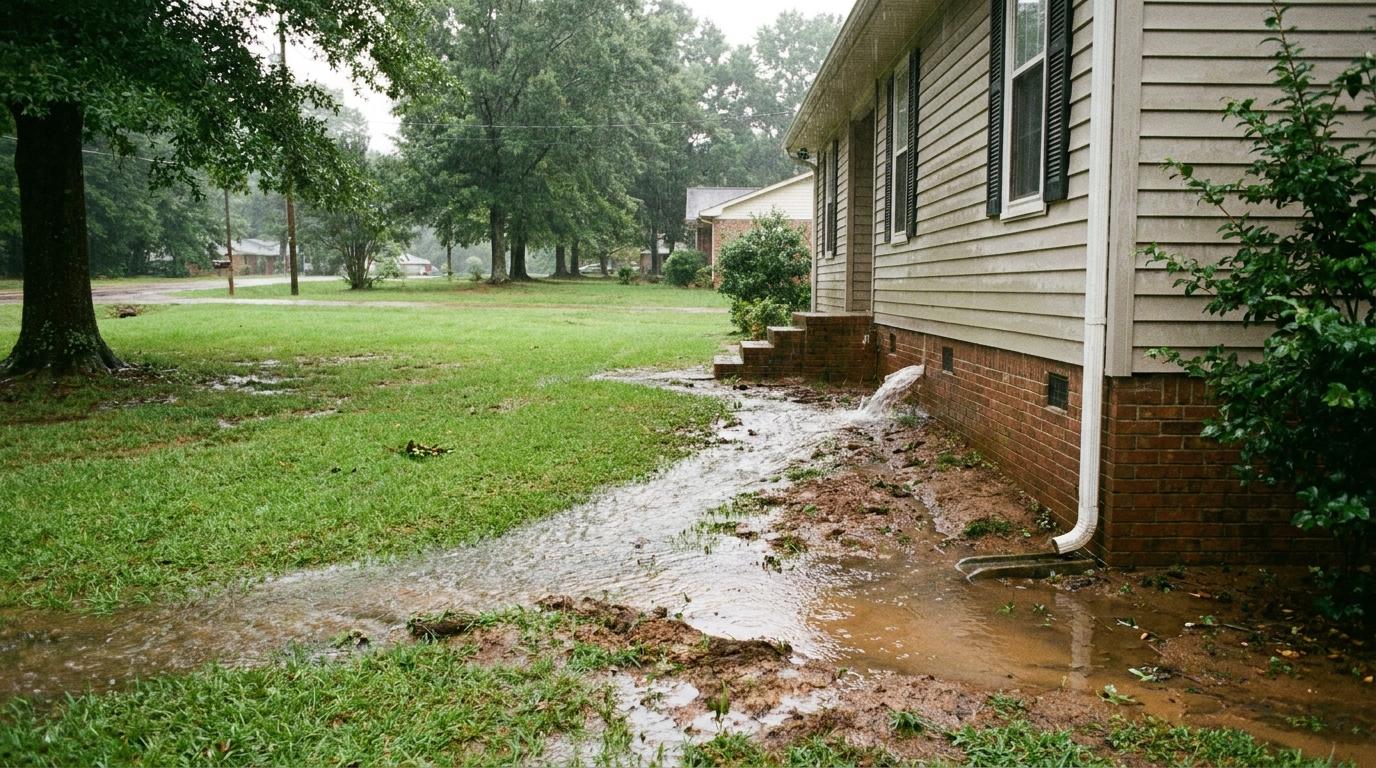
Mississippi reverses the equation. Between June and September, average relative humidity in the Jackson metro area exceeds 75%, according to NOAA climate data. When that warm, moisture-heavy air enters a cooler crawl space through foundation vents, it hits surfaces below the dew point and condenses. The result is water on vapor barriers, saturated insulation, and conditions that accelerate wood rot.
The Condensation Cycle
Warm air enters through the vents, cools against the ground and foundation walls, and drops its moisture. That moisture rarely evaporates fully because the next wave of humid air arrives before the space dries. Over a Mississippi summer, this cycle pushes crawl space humidity above 80%, well into the range where mold colonies establish within 48 hours. Fiberglass batt insulation absorbs moisture, sags from the joists, and loses its R-value in the process.
Why Sealed Crawl Spaces Outperform in High Humidity
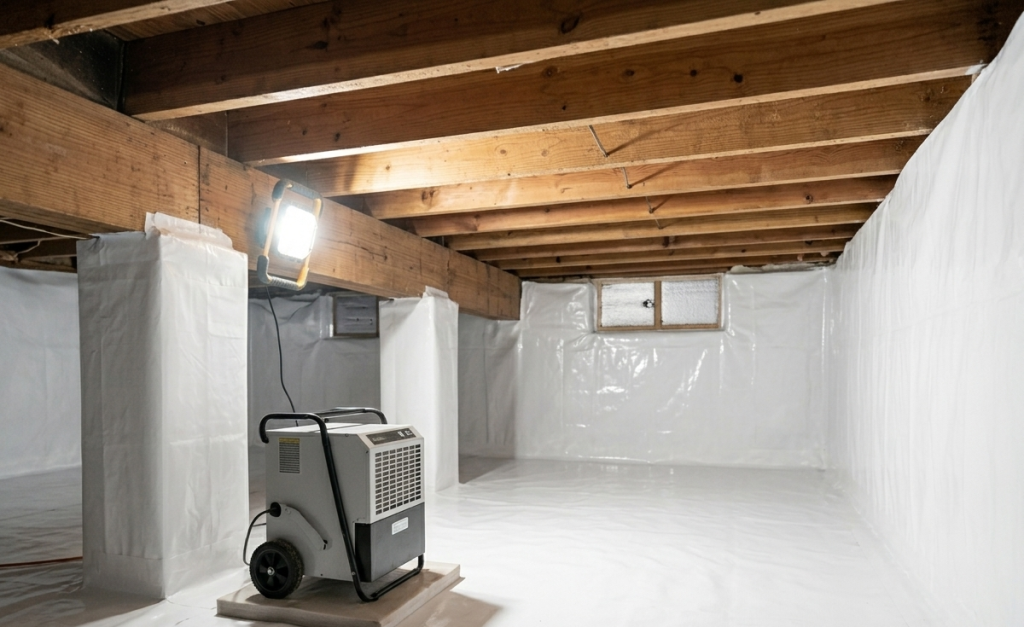
A sealed crawl space eliminates the ventilation openings entirely and covers the ground and walls with a continuous vapor barrier, typically reinforced polyethylene rated at 12 mils or thicker. Instead of relying on outside air, the sealed system prevents moisture from entering.
Moisture and Structural Protection
With no outside air entering, humidity levels inside a properly sealed crawl space stay between 45% and 55% year-round, controlled by a dehumidifier. That range falls below the 60% threshold where mold growth and wood decay begin. Homes with sealed crawl spaces across the Jackson area typically show less structural settling and fewer pest problems than homes with vented spaces. When settling has already occurred, crawl space repair restores support before the vapor barrier goes in.
Cost, Energy, and Long-Term Value
Encapsulation in Mississippi typically costs $5,000 to $15,000 depending on crawl space size, existing moisture damage, and whether structural repairs are needed. A vented crawl space carries no upfront cost, but mold remediation runs $1,500 to $5,000 per occurrence, insulation replacement costs $1,000 to $3,000, and the HVAC system works harder against an uncontrolled space below.
Energy Savings
The Department of Energy reports that sealing a crawl space can reduce heating and cooling costs by 15% to 20%. In Mississippi, where air conditioning runs seven to eight months a year, that compounds into hundreds of dollars in annual savings. A sealed crawl space also reduces the load on HVAC equipment because conditioned air no longer escapes through the floor system. Because a crawl space directly affects your home’s energy use, sealing delivers savings that venting never will.
Frequently Asked Questions
Can you seal a crawl space that already has vents?
Existing vented crawl spaces can be converted to sealed systems by closing the foundation vents, installing a vapor barrier, and adding a dehumidifier. Superior Foundation Services performs this conversion across Jackson and surrounding areas, including removal of old insulation. Most conversions take one to three days depending on crawl space size.
How long does crawl space encapsulation last in Mississippi?
Crawl space encapsulation with a properly installed vapor barrier typically lasts 20 years or more before the material needs inspection or replacement. Longevity depends on maintaining the dehumidifier and preventing new water intrusion from plumbing leaks or grading changes.
Does sealing a crawl space lower energy bills?
Sealing a crawl space reduces energy costs by preventing conditioned air from escaping through the floor system. The DOE reports 15% to 20% reductions in heating and cooling costs for homes that switch from vented to sealed, with the largest savings in hot, humid climates like Mississippi.
The Vents Are the Problem, Not the Fix

For decades, crawl space vents were standard in Mississippi homes—and for decades they’ve been letting humid air in rather than drying anything out. The humidity readings, the mold growth, and the energy bills all say the same thing: in this climate, sealing outperforms venting. If your crawl space smells musty, your floors feel cold in winter, or your HVAC never seems to rest, the vents are likely the reason.
The fix is to stop the moisture at the source instead of inviting it in. Contact Superior Foundation Services at (601) 941-2125 or schedule a free inspection to find out whether sealing your crawl space makes sense for your home.