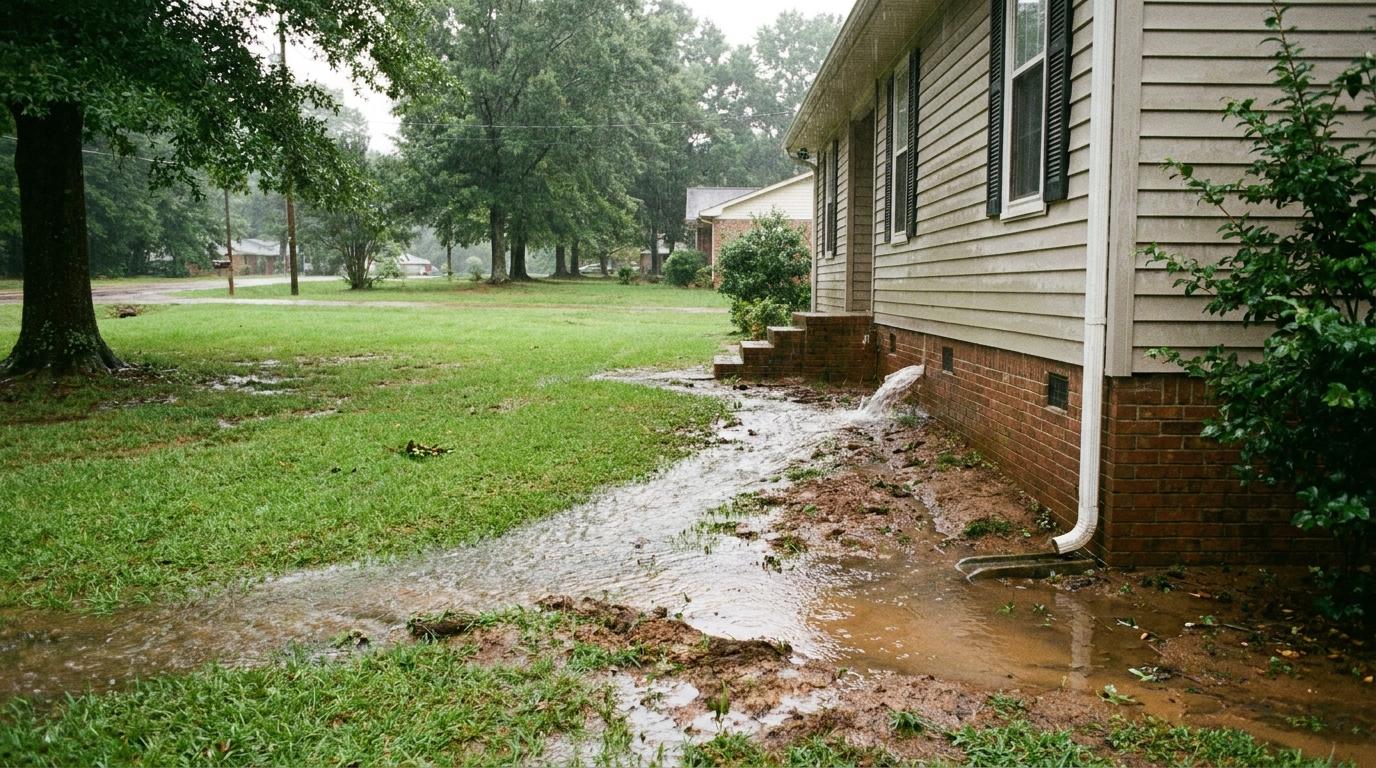
How effective French drains are at keeping basements dry depends on whether the system matches the water source. When correctly positioned, a French drain intercepts groundwater before it starts pressing on your foundation walls. Superior Foundation Services installs drainage systems for homeowners across Jackson and Central Mississippi, where Yazoo clay and heavy rainfall make French drains among the most impactful repairs available.
That wet basement after a storm probably feels like a waterproofing problem. Most of the time it isn’t—it’s a drainage problem. Water with nowhere to go finds the only path available, which is through or around your foundation. Caulk and sealant patch the crack, but a French drain eliminates the pressure that created it. That’s a fundamentally different repair.
What a French Drain Does and Where It Falls Short

A French drain gives groundwater a low-resistance exit. A gravel-filled trench along your foundation perimeter collects water before it presses against the walls, and a perforated pipe inside carries it to a daylight outlet, sump pump, or storm drain.
French drains fall short when the problem isn’t groundwater: surface runoff, a high water table, and plumbing leaks all need different solutions. Gravel clogging with silt also degrades performance. In Mississippi’s clay-heavy soil, that can happen within several years without filter fabric wrapping the trench.
Why French Drains Work Especially Well in Mississippi
Yazoo clay, the expansive soil underlying most of the Jackson metro area, holds water rather than letting it percolate, creating a perched water table against your foundation after every storm. That’s exactly what a French drain intercepts. Mississippi’s heavy annual rainfall means drainage systems here work harder than in drier states. In Yazoo clay, proper filter fabric and correct outlet elevation can mean the difference between a system that performs reliably for years and one that fails well short of its potential.
Interior vs. Exterior French Drains: Which One Belongs in Your Basement?

Exterior French drains stop water before it enters, which is the ideal outcome. Installation typically runs $8,000 to $15,000 in the Jackson area based on recent local projects that require excavating around the foundation. It’s best when the exterior waterproofing membrane is also failing, since both get resolved in the same dig.
Interior French drains (also called weeping tile systems) typically run $4,000 to $12,000 based on current market rates, with no excavation required. They manage water after it enters the wall. For older homes in Madison or Flowood with limited exterior access, interior is the practical choice. If your leaky basement shows wall bowing or horizontal cracks, address the structural damage first.
How To Tell If Your French Drain Is Doing Its Job
A working French drain keeps your basement dry during and after storms. If water appears on the floor within 24 hours of heavy rain, the drain is overwhelmed, clogged, or isn’t positioned to intercept your actual water source.
The most reliable way to check is to look at the sump pit during active rain. Steady inflow means the system is working. Dry pit with wet walls means it isn’t intercepting. Overflowing pit with wet walls means it’s undersized. Annual flushing prevents silt buildup. For drainage solutions across Central Mississippi, a professional inspection every few years catches problems early.
Frequently Asked Questions
How long does a French drain last around a foundation?
A French drain with proper filter fabric carries typical industry life estimates of 30 to 40 years. In Mississippi’s clay soil, that range often drops closer to 20 to 30 years without maintenance, as fine clay particles migrate into the gravel over time. Superior Foundation Services recommends annual flushing to extend system life and catch early silt buildup before it restricts flow.
Can a French drain solve a wet basement completely on its own?
Groundwater pressure is one of the most common causes of wet basements, and a French drain addresses it directly, but it isn’t the only cause. Surface runoff, window well leaks, and plumbing failures each require different fixes. A professional inspection determines whether drainage alone resolves the problem or whether other repairs are needed.
Do French drains work in clay soil?
French drains work in clay soil, but installation quality matters more than in sandy conditions. Without filter fabric separating gravel from surrounding clay, fine particles clog the pipe within a few years. Fabric wrapping and correct outlet placement are the details most often skipped, and the ones that determine whether a system lasts a decade or three.
Stop Guessing What’s Letting Water In
A wet basement is a foundation problem developing slowly. French drains are highly effective when matched to the right water source. If you’re not sure which system your home needs, a professional assessment is the right place to start.
Schedule a free foundation inspection with Superior Foundation Services. We’ve been solving drainage problems for Mississippi homeowners for 15 years. We’ll tell you exactly what your basement needs without overselling a solution you don’t need.