Expansive clay soil is the leading cause of foundation damage in Mississippi. The Yazoo clay beneath Central Mississippi swells when it rains and shrinks in drought, and that constant shrink-swell movement cracks slabs, shifts walls, and jams doors out of alignment season after season. The fix isn’t patching the cracks; it’s stabilizing the foundation with piers that reach stable soil below the clay, paired with drainage that controls the moisture driving the movement.
Most homeowners blame those cracks on aging concrete or normal settling. The real cause is active ground moving under the slab, and it won’t stop on its own. Superior Foundation Services stabilizes homes across the Jackson metro with foundation repair and piers built for our soil. In this article, discover how Yazoo clay moves, the warning signs that point to active damage, and the repair methods that stop the cycle for good.
What Yazoo Clay Does to a Foundation

Mississippi sits on one of the most problematic soil formations in the southeastern United States. Yazoo clay contains high concentrations of montmorillonite, a mineral that absorbs water and expands with significant force. When rain saturates the ground, this clay pushes upward against the foundation. When drought arrives, the clay contracts and opens deep vertical cracks in the soil.
This shrink-swell cycle repeats every season, driven by the same weather patterns that affect foundations year after year. Nationally, expansive soils cause an estimated $13 billion in structural damage annually, and Mississippi’s Yazoo formation is among the most aggressive. Foundations on this soil don’t settle once and stop. They move up, down, and laterally with every wet-to-dry transition.
Warning Signs of Clay-Driven Foundation Damage

Not every crack signals an emergency, but certain patterns point directly to active soil movement rather than cosmetic wear.
Stair-Step Cracks in Brick or Block
Diagonal cracks following mortar joints indicate differential settlement. One section of the foundation is moving while an adjacent section holds, and the wall splits along the weakest line. These cracks often appear wider at the top than at the bottom, which signals upward soil pressure on one side.
Doors and Windows That Stick Seasonally
Doors that jam during rainy months and swing freely in dry weather mean the frame is shifting with the soil. Seasonal sticking is one of the earliest signs of active clay movement beneath the slab and often appears before visible cracks develop.
Gaps Between Walls and Ceiling or Floor
Visible separations at wall-to-ceiling or wall-to-floor joints mean the foundation has shifted enough to pull the structure apart. These gaps typically widen during drought cycles when clay contracts and narrow again when rain returns.
How to Stop Clay Soil Foundation Damage

The right fix depends on whether the home already exists or is still being built.
Pier Systems for Existing Homes
Steel push piers and concrete piers transfer the weight of the house past the unstable clay and down to load-bearing strata, typically 15 to 25 feet below grade in the Jackson area. Superior Foundation Services uses the Dynapier® system to reach refusal depth and lock the foundation in place. This repair carries a lifetime transferable warranty.
Helical Piers for New Construction
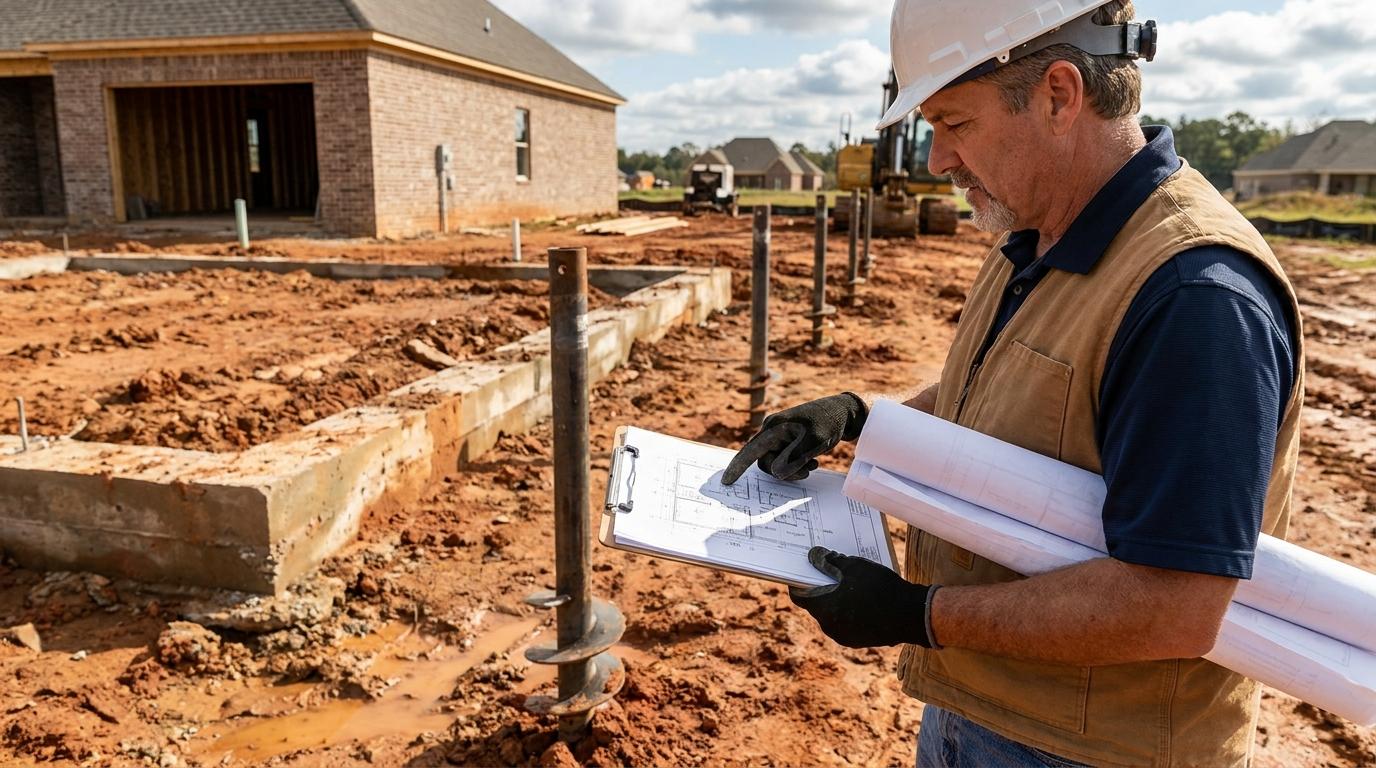
For homes being built on clay-heavy lots, helical piers installed before the slab is poured anchor the foundation to stable soil from day one. These piers reduce future movement risk and can offset excavation costs by minimizing required dig depth. Superior Foundation Services backs helical pier installations with a 10-year transferable warranty.
Drainage Solutions
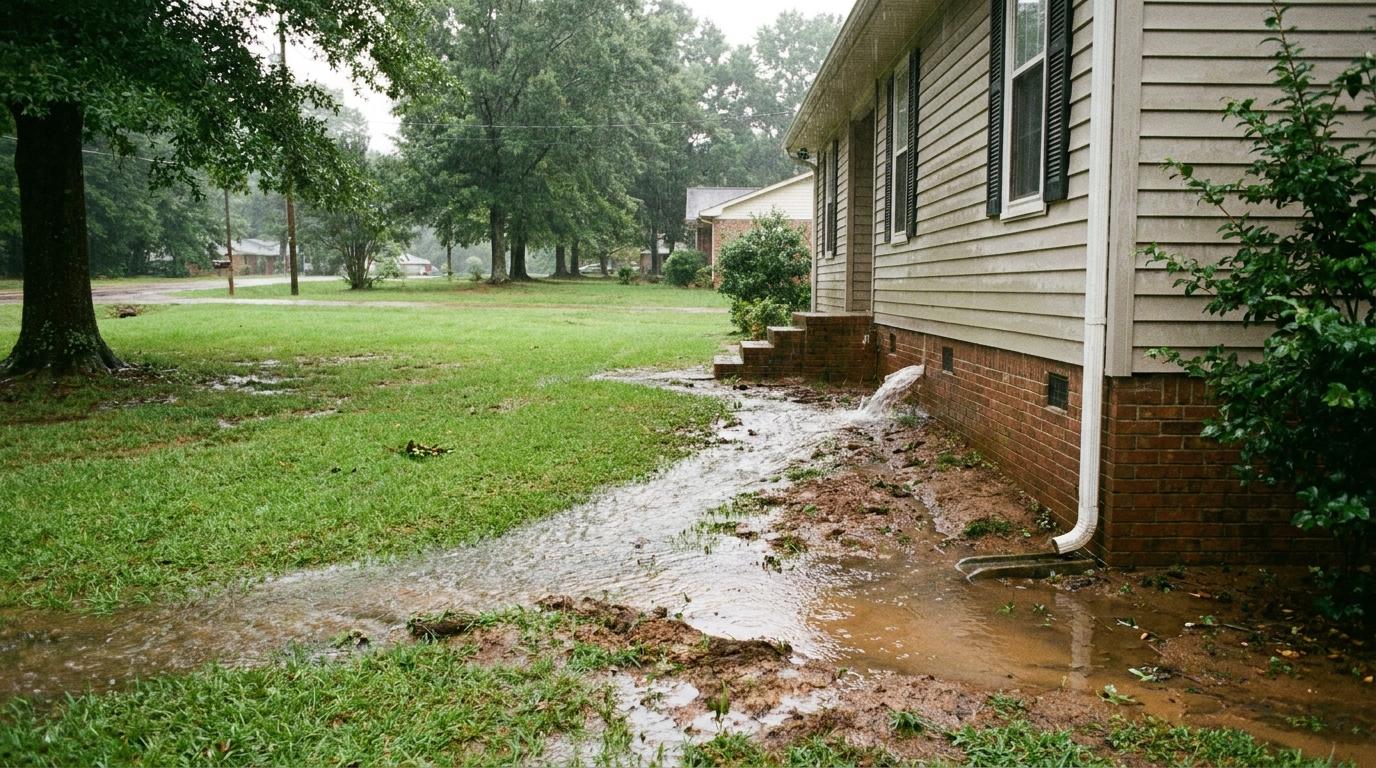
Piers stop the movement, but drainage solutions control the moisture that triggers the swelling. French drains installed along the foundation, grading corrections, downspout extensions, and dry wells reduce the water reaching soil around the foundation. Combining pier stabilization with proper drainage is the most effective long-term approach for homes on Yazoo clay.
Frequently Asked Questions
How deep does Yazoo clay go in Mississippi?
Yazoo clay deposits in Mississippi typically extend 10 to 30 feet below the surface, though depth varies by location within the formation. The clay layer runs thickest through the central belt from Vicksburg through Jackson to Yazoo City. Foundation piers must penetrate past this layer to reach stable soil beneath, which is why pier depth is the primary cost variable in Central Mississippi repairs.
Can landscaping prevent foundation damage from expansive clay?
Landscaping alone cannot prevent foundation damage from expansive clay soil, but proper grading and plant placement reduce the severity of moisture swings near the foundation. Trees planted too close to the house draw moisture during dry periods, accelerating clay shrinkage. A professional drainage system paired with correct grading provides significantly more protection than vegetation management alone.
Does homeowners insurance cover clay soil foundation damage?
Standard homeowners insurance in Mississippi typically does not cover foundation damage caused by expansive clay soil. Insurers classify soil movement as a maintenance issue rather than a sudden event. Some carriers offer separate earth-movement endorsements, but coverage varies. Superior Foundation Services provides free inspections that document the damage, which helps homeowners pursue repair financing even without insurance coverage.
Stop Fighting the Clay. Anchor Below It

Mississippi’s Yazoo clay will keep swelling and shrinking as long as the seasons turn. The question isn’t whether the ground moves; it’s whether your house has to move with it. Piers driven down to stable soil take the foundation off the clay entirely, and drainage work reduces the moisture swings that set the whole cycle in motion. Together, they break the pattern of patching and repainting.
The longer active movement continues, the more it costs to correct. Now is the best time to address the cracks you’re seeing. Contact Superior Foundation Services at (601) 941-2125 or schedule a free foundation inspection to find out where your home stands.