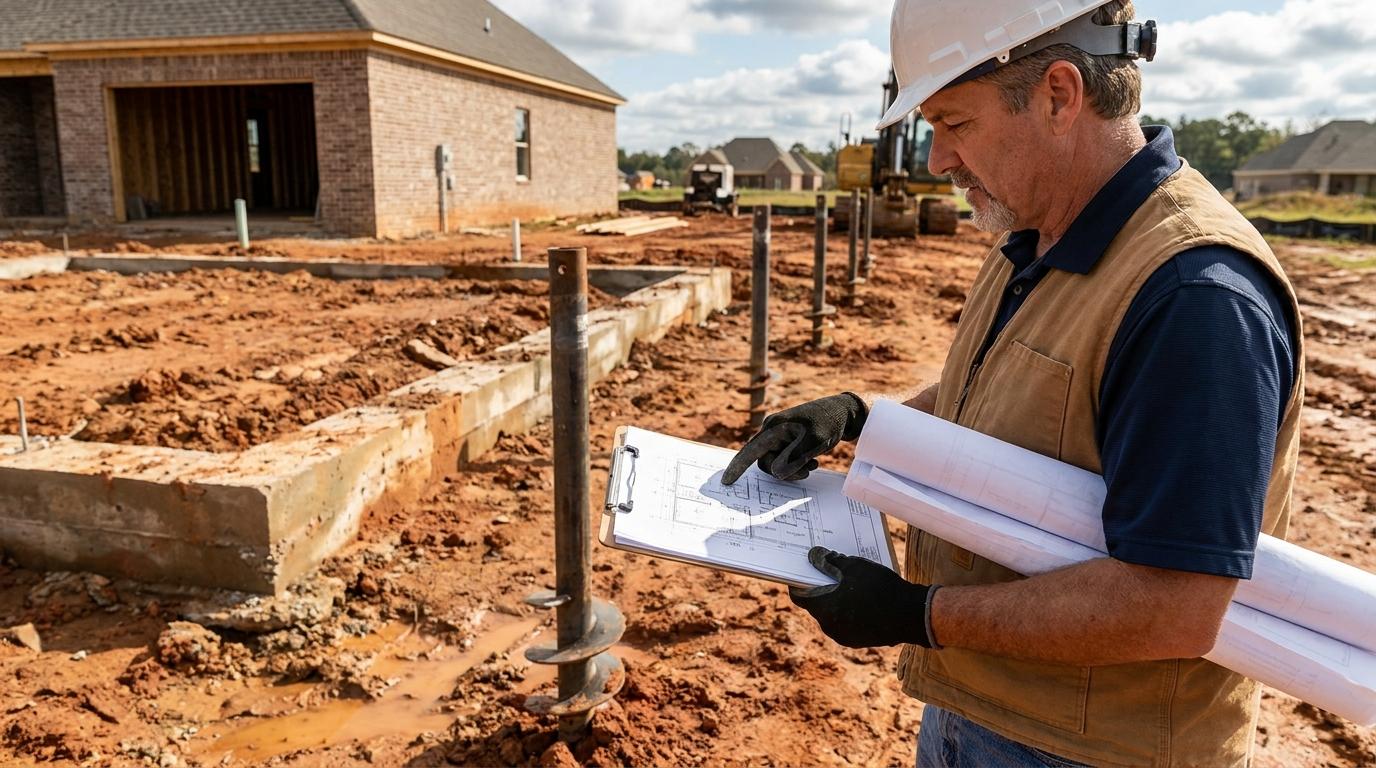
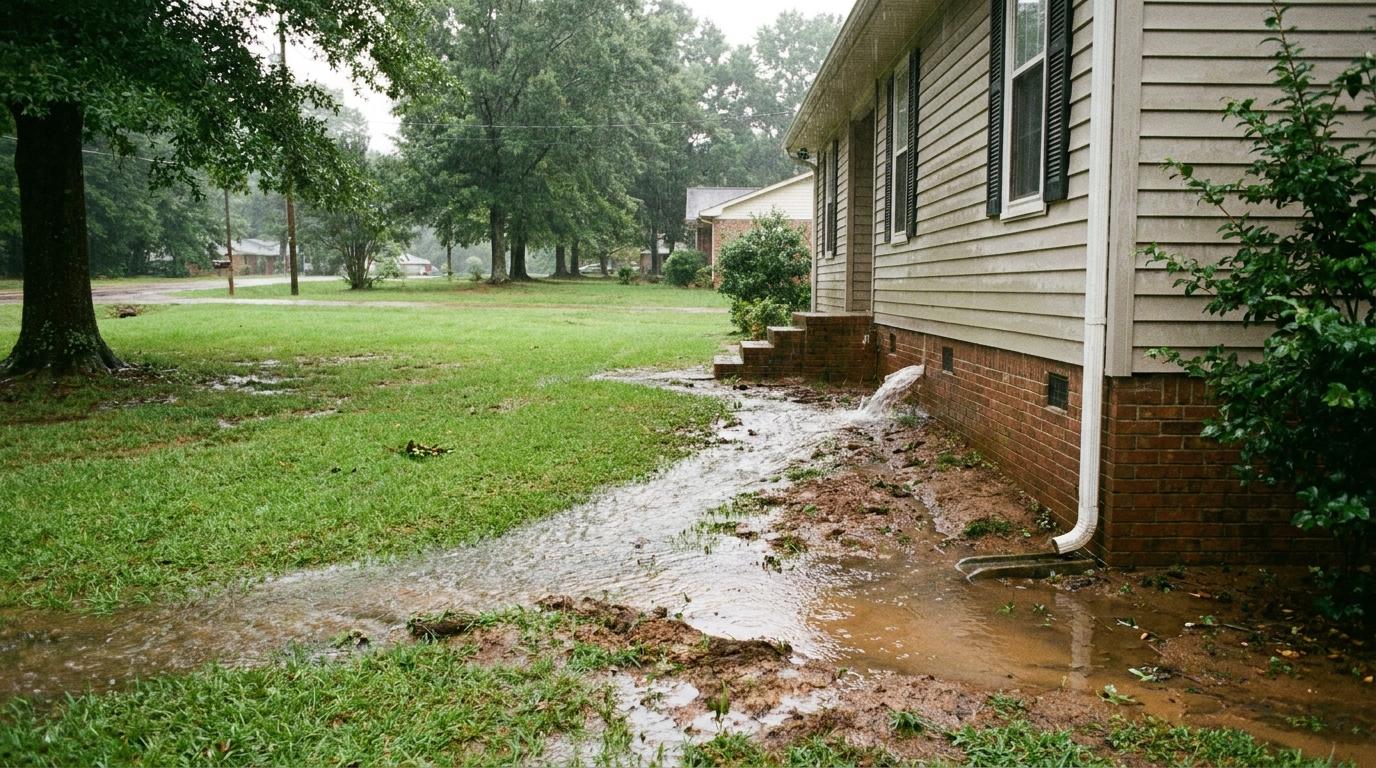
Push piers and helical piers both stabilize settling foundations, but they use different installation methods and work best in different soil conditions. Push piers cost $1,500 to $3,000 per pier and reach depths of 20 to 60 feet. Helical piers cost $2,000 to $4,000 per pier and install to 15 to 30 feet. Superior Foundation Services stabilizes foundations with both pier types for homeowners across the Jackson metro area using the patented Dynapier® system.
Most homeowners assume the more expensive pier is always the better option. In Mississippi’s Yazoo Clay, the right pier type depends on how much the home weighs, how deep stable soil sits, and whether the structure has already settled or is being built new. A helical pier can outperform a push pier on a light structure, and a push pier can fail on a home without enough weight to drive it to depth.
How Push Piers Work
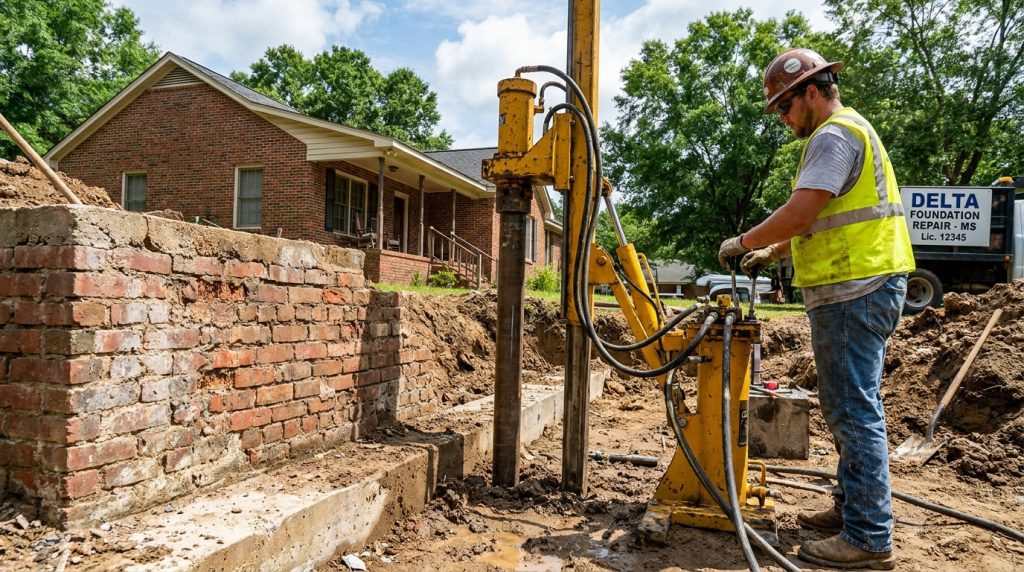
A push pier is a series of steel tubes driven straight down through the soil using a hydraulic ram. The weight of the existing structure provides the resistance needed to drive each section deeper until the pier reaches load-bearing strata. Once seated, the pier transfers the building’s weight from the unstable surface soil to stable ground below.
Push piers handle loads up to 70,000 pounds per pier, making them well suited for heavy residential foundations and foundation repair on existing structures that have already settled. The key requirement is structure weight: the building has to be heavy enough to provide the reaction force the hydraulic ram needs. Light structures like porches, sunrooms, and additions may not have sufficient mass.
How Helical Piers Work
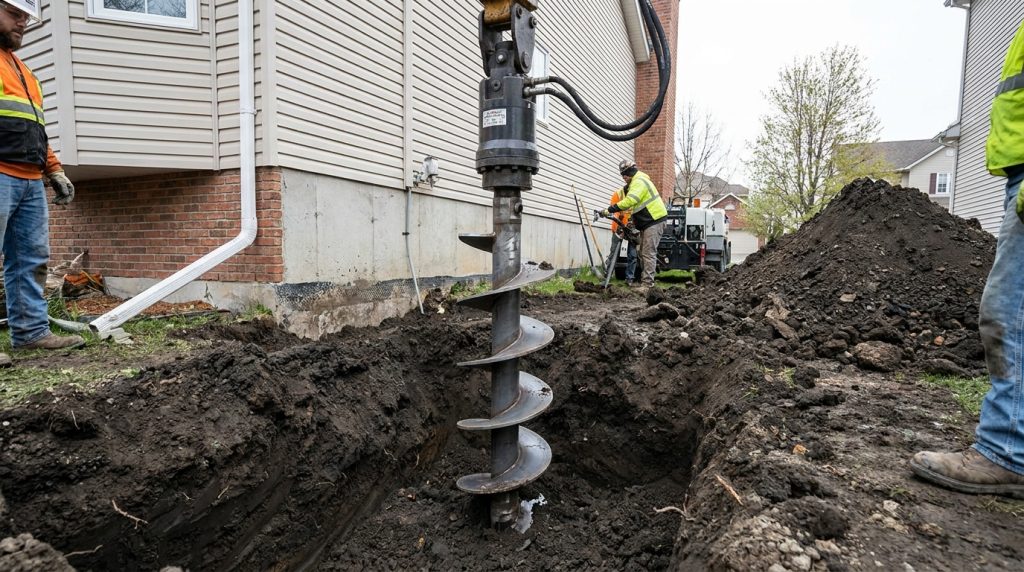
A helical pier looks like a large screw with one or more helix plates welded to a central steel shaft. A hydraulic torque motor rotates the pier into the ground, and the helix plates pull it through the soil. Load capacity is verified in real time by monitoring torque during installation, which confirms the pier has reached competent bearing soil.
Helical piers support up to 50,000 pounds per pier in standard configurations. They don’t need the building’s weight for installation, which makes them the go-to choice for lighter structures, new construction, and additions. Installation produces minimal vibration and requires less excavation than push piers. Most helical pier projects in the Jackson area are complete in one to three days.
The choice between push piers, helical piers, and other methods comes down to what’s actually under your foundation and what’s sitting on top. Our guide explains how to match the right foundation repair method to your home’s conditions.
Which Pier Type Fits Mississippi’s Yazoo Clay
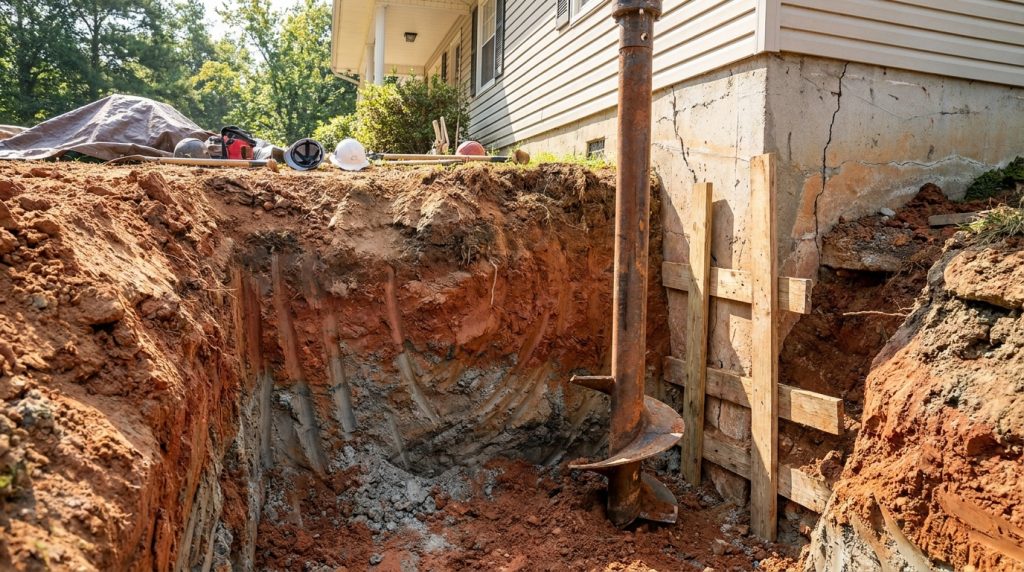
Yazoo Clay creates problems for both pier types but in different ways. The clay’s shrink-swell cycle generates massive lateral pressure on pier shafts, and the active clay zone can extend 15 feet or more below the surface before reaching stable bearing soil.
When Push Piers Are the Better Fit
Push piers work best when the home is heavy enough to provide installation force and stable soil sits deep below the active clay zone. In areas like Jackson and Ridgeland where bedrock or dense bearing soil can be 20 to 40 feet down, push piers drive through the entire unstable layer. The Dynapier® system installed by Superior Foundation Services is engineered specifically for these deep, challenging conditions.
When Helical Piers Are the Better Fit
Helical piers work better for lighter structures, new construction stabilization, and sites where bearing soil is within 15 to 25 feet of the surface. The torque-based installation gives the contractor real-time feedback on soil resistance at every depth, which is valuable in Mississippi’s variable soil conditions. For homeowners dealing with a sinking foundation on a crawl space or pier-and-beam home, helical piers often provide the most efficient solution.
Frequently Asked Questions
How many piers does a typical Mississippi home need?
Most residential foundation repairs in the Jackson metro area require 6 to 12 piers spaced at roughly six-foot intervals along the affected walls. A localized settlement affecting one corner may need four to six piers. Full-perimeter stabilization on a larger home can require 12 or more. The number depends on the extent of movement and the load each wall section carries.
Can push piers and helical piers be used on the same house?
Yes. Some homes have heavy load-bearing walls that benefit from push piers and lighter sections like additions or porches that require helical piers. Superior Foundation Services evaluates each wall section independently and recommends the pier type that fits the load and soil conditions at that specific location.
How long do foundation piers last?
Steel push piers and helical piers are engineered for permanent installation. The galvanized or epoxy-coated steel resists corrosion in soil environments. When properly installed to competent bearing strata, both pier types provide lifetime structural support. Superior Foundation Services backs all pier installations with a lifetime transferable warranty.
Match the Pier to Your Soil

The right type of pier for your Mississippi home depends on three factors: how much the structure weighs, how deep stable soil sits below the Yazoo Clay, and whether you’re repairing an existing foundation or stabilizing new construction. Push piers handle heavy existing homes with deep bearing strata. Helical piers handle lighter structures and variable soil depths. Both deliver permanent stabilization when matched correctly to the site.
Superior Foundation Services provides free foundation inspections that include soil assessment and pier recommendations. Call (601) 941-2125 or schedule your free inspection to find out which pier system fits your home.